
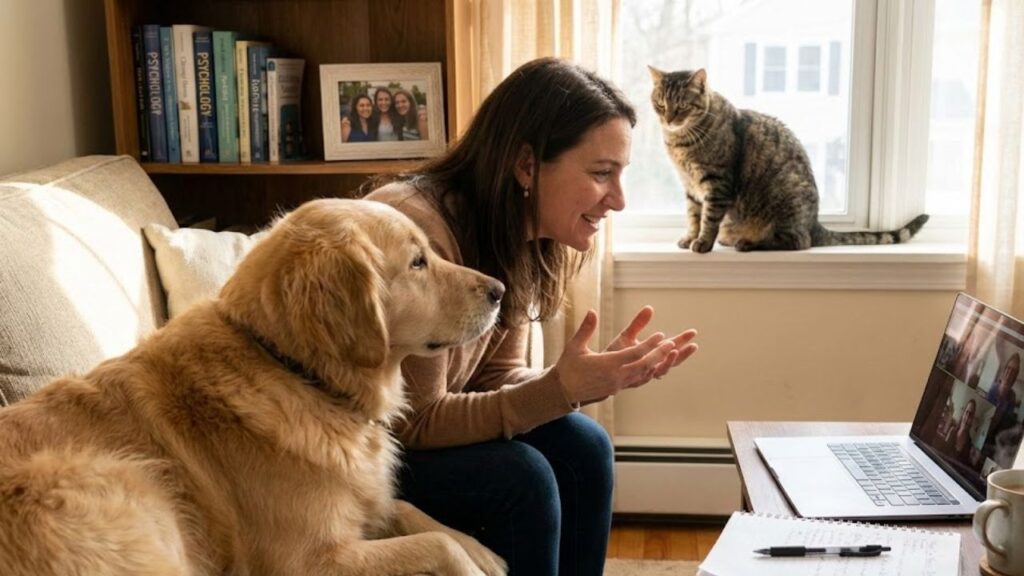
In countries like the United States, more people are openly chatting with their pets as if they were human companions — and psychology says this behavior may reflect deeper personality traits. Far from being silly, these interactions often signal empathy, creativity, and emotional intelligence. Whether it’s narrating your cat’s inner thoughts or asking your dog how their day was, the act of talking to pets reveals fascinating insights about how we connect emotionally. In fact, psychologists suggest it’s a subtle but powerful marker of how we view relationships, responsibility, and even self-awareness.
Talking to Pets Shows High Emotional Awareness
When someone talks to their pet like a human, it often signals a strong sense of emotional intelligence. People who do this tend to show higher empathy levels, often imagining what their pets might be thinking or feeling. This habit reflects deep emotional bonds and a tendency to nurture. Psychologists note that individuals with strong non-verbal sensitivity are more likely to project human traits onto animals. Instead of being viewed as irrational, this behavior shows an ability to connect deeply even without spoken language.
It Can Indicate Imagination and Creativity
Chatting with pets often comes from a place of creative thinking. People who create little conversations with their animals tend to have rich inner worlds and are often more playful and expressive. This type of imaginative behavior shows a person is comfortable with abstract thinking and enjoys engaging in role-play scenarios. According to psychologists, anthropomorphizing pets — giving them human voices or personalities — reveals a strong link to creative problem-solving and openness to experience.

Talking to Animals Reflects Secure Attachment
In psychology, how we treat pets can mirror our attachment styles. People who regularly talk to pets like humans often display a secure emotional base. These individuals typically have stable relationships and a strong sense of trust and loyalty. The act of speaking to pets also suggests a tendency to seek emotional connection even in quiet, non-judgmental spaces. Rather than being isolated behavior, it’s often associated with healthy emotional regulation and low levels of social anxiety.

Why It Matters More Than You Think
While it may look quirky on the surface, talking to pets like they’re human reveals a surprisingly rich set of psychological traits. From empathy and imagination to trust and stability, this simple behavior offers a glimpse into how someone views the world around them. It’s not just about filling the silence — it’s a form of emotional outreach. In fact, researchers argue it can even improve your mental health by reducing loneliness and reinforcing routines. So the next time you ask your cat how their nap was, know you’re tapping into something deeper than you realize.
| Trait | Linked Behavior |
|---|---|
| Emotional Intelligence | Reads pet body language |
| Creativity | Invents voices or dialogue |
| Empathy | Worries about pet’s feelings |
| Attachment Security | Treats pet like family |
| Routine and Stability | Regular check-ins with pet |
| Nonverbal Sensitivity | Responds to pet’s expressions |
Frequently Asked Questions (FAQs)
1. Is talking to pets considered normal?
Yes, it’s a common and healthy behavior with psychological benefits.

2. Does it mean someone is lonely?
Not necessarily — it can also reflect strong emotional awareness.
3. Can this behavior improve mental health?
Yes, it can reduce stress, loneliness, and support routine.

4. Is this trait more common in certain age groups?
It’s seen across all ages but may be more visible in pet-loving adults.
