
Eco-friendly brands are booming in the United States, promising cleaner choices and a guilt-free lifestyle for conscious consumers. From reusable packaging to carbon-neutral claims, these companies often position themselves as heroes in the climate story. But beneath the green labels and polished marketing lies a more complicated reality. Many popular “sustainable” brands still contribute to environmental damage in ways that are rarely discussed. Understanding how this happens—and why consumers continue to support them—helps reveal the gap between intention and impact in today’s green economy.
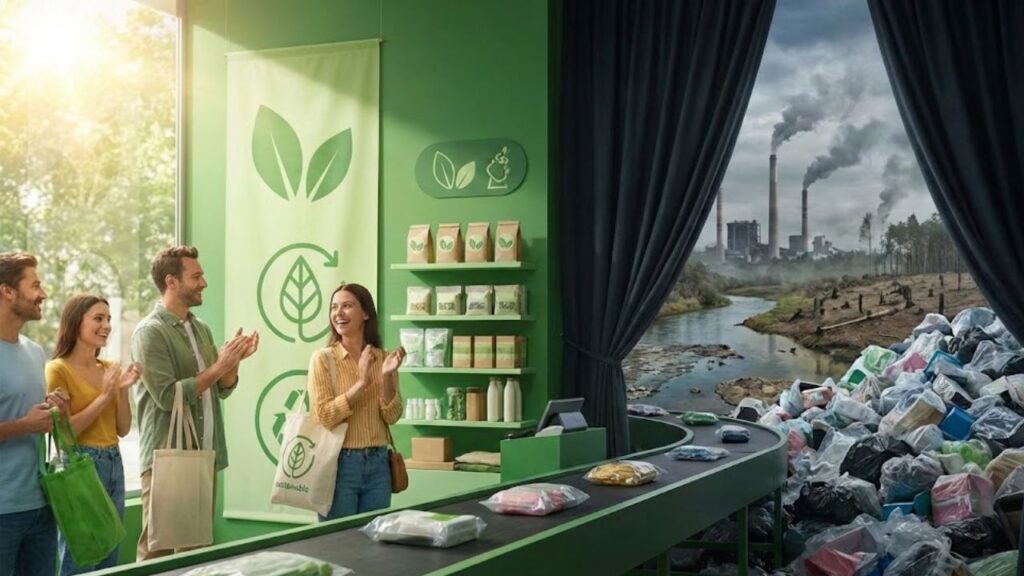
How eco friendly brands hide environmental damage
Many eco friendly brands rely on clever storytelling rather than genuine reform. They spotlight one positive action while ignoring larger harmful practices elsewhere in their supply chain. For example, a company may use recycled packaging but still depend on resource-heavy manufacturing or overseas production that increases hidden shipping emissions. Limited transparency allows selective sustainability claims to dominate consumer perception. Certifications are often narrow in scope, creating misleading green labels that feel official but don’t reflect total impact. The result is a brand image that looks responsible while masking deeper environmental costs.
Why green marketing keeps consumers cheering
Green branding works because it taps into emotion and identity. In the US market, shoppers want to feel part of a solution, not the problem. Brands use feel-good eco messaging to build loyalty, reinforcing the idea that buying is a form of activism. Social media amplifies this through influencer-driven trust signals, where aesthetics outweigh analysis. Over time, this creates brand moral comfort, reducing the urge to question deeper practices. Even when doubts surface, convenient ethical shortcuts make it easier to keep supporting familiar names.

The real environmental cost of sustainable products
Many so-called sustainable products still rely on processes that strain ecosystems. Organic materials can require intensive water usage, while renewable inputs may involve land conversion pressures that harm biodiversity. Some brands offset emissions instead of reducing them, leading to carbon accounting loopholes. Short product lifecycles also contribute to fast green consumption, where eco items are replaced as often as conventional ones. When scaled globally, these practices reveal how partial solutions can still drive significant environmental damage.

Understanding the green contradiction
The contradiction at the heart of eco friendly branding is that sustainability is often treated as a feature, not a system. In the United States, market-driven solutions reward perception more than performance, encouraging brands to optimize image over impact. Consumers aren’t wrong for wanting better options, but limited consumer awareness makes it hard to separate progress from promotion. Real change requires system-level accountability, not just better labels. Until then, the gap between ethical branding narratives and environmental reality will continue to grow.
| Eco Claim | What It Promises | Hidden Issue |
|---|---|---|
| Recycled Packaging | Less plastic waste | High energy processing |
| Carbon Neutral | Zero emissions impact | Reliance on offsets |
| Organic Materials | Eco-safe sourcing | Heavy water use |
| Ethical Supply Chain | Responsible production | Limited transparency |
Frequently Asked Questions (FAQs)
1. Are all eco friendly brands harmful?
No, but many still have environmental impacts that aren’t fully disclosed.
 What are the health benefits of melon?
2. Why do consumers keep supporting them?
Because green marketing creates trust and reduces the desire to question claims.
3. Are certifications always reliable?
Some are useful, but many cover only a small part of a product’s lifecycle.

4. How can consumers make better choices?
By researching supply chains, longevity, and overall environmental impact.
