
Your dog walks over, sits neatly in front of you, and lifts one paw into the air. They hold it there with a mix of patience and quiet insistence. You smile, maybe take the paw, say a quick “Hey buddy,” and return to your screen. It’s a familiar moment, easy to overlook.
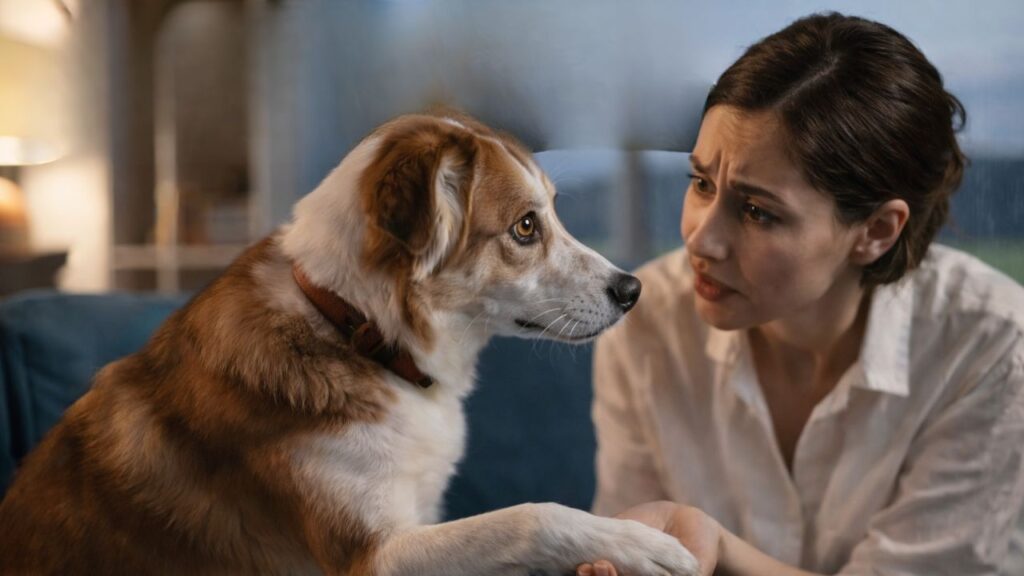
But if you slow down and really pay attention, something else emerges. The eyes look slightly wider. The ears tilt just so. The body isn’t relaxed or playful—it’s focused. This isn’t about showing off. It’s about communicating.
When a lifted paw isn’t a performance
Most people associate a raised paw with a high five, a greeting, or a polite demand for treats. Yet many dog trainers and behaviorists explain that this gesture can mean something very different. In many situations, a lifted paw signals uncertainty, mild stress, or emotional tension. Because it looks endearing, we often reward it—missing the message beneath the surface.

The rest of the body tells the truth. Are the muscles tight? Is the tail held low or neutral? Are the ears angled back, the eyes flicking around the room? In those moments, the raised paw may be your dog’s way of pausing the situation and quietly asking for reassurance.
 Goodbye to Old Licence Rules: Older Drivers Face New Renewal Requirements From February 2026
Imagine your dog standing on a cold metal scale at the vet. Their mouth is closed, head lowered slightly. Instead of pulling away, they lift one paw and gently press it against your leg. You see affection. The vet sees a clear sign of discomfort.
Or picture a storm outside. Thunder rolls, and your dog—who was asleep moments ago—is now sitting upright, one paw resting on your foot. No jumping. No panic. Just calm, deliberate contact. That’s not play. That’s a request for safety.
We like to believe dogs only ask for food or fun.
They also ask for security.
The emotional language dogs use instead of words
Canine behaviorists often describe the raised paw as a displacement signal or appeasement gesture. It commonly appears when a dog feels torn—curious yet uneasy, interested yet unsure. The gesture slows everything down. It gives them time.
From a dog’s perspective, the world is loud, fast, and unpredictable. Humans talk constantly, move quickly, and overlook the quieter cues. A paw held mid-air works like punctuation in their emotional sentence, adding emphasis where words don’t exist.
When we dismiss it as a cute trick, we risk crossing boundaries without realizing it. Once you begin noticing the full picture, the signal becomes harder to ignore.
How to read the full message behind the paw
The fastest way to understand a raised paw is to zoom out. Watch the whole dog, not just the charming foot. Start with the face. Are the eyes soft or wide? Is there lip licking, yawning, or sudden stillness? Then check the body. Is the tail loose or stiff? Is your dog leaning toward you or subtly away?
The next time that paw lands on your knee, pause for three seconds. Breathe. Observe. Quietly label what you see: tense shoulders, ears back, still mouth. This small pause can shift your response from automatic praise to genuine understanding.
A common mistake many owners admit to is turning every raised paw into a training cue. Your dog places a paw on you, and immediately the commands begin. “Paw! Other paw! High five!” It’s fun, treats appear, and everyone laughs. But if that paw came from worry, you just talked over a whisper with noise.

Anxious dogs often stay polite. They don’t bark or growl. Instead, they communicate softly. A paw. A lean. A still posture in a busy room. Many owners later realize their dog had been speaking clearly for months—they simply didn’t know the language.
No one gets this right all the time.
But noticing it sometimes already changes everything.
What behavior experts say about pawing
“Pawing isn’t one single behavior,” explains UK-based canine behaviorist Laura Kent. “For some dogs, it’s learned attention-seeking. For others, it signals discomfort. The key is consistency—notice when it happens, what came just before, and how the body looks overall. The paw is only one letter in a much larger emotional alphabet.”
Simple ways to respond more thoughtfully
- Start with context: Ask where you are, what just happened, and who is nearby. Pawing during a storm is very different from pawing at treat time.
- Scan body language: Look at eyes, ears, tail, mouth, and posture. A loose, wiggly dog is not sending the same message as a stiff, silent one.
- Stay calm and quiet: If the paw suggests stress, lower your voice, slow your movements, and offer gentle contact instead of excitement.
- Watch for patterns: Does the paw appear during visitors, loud noises, or tense moments at home? Repetition reveals the real trigger.
- Support without crowding: Sometimes the best response is simply staying close, resting a hand lightly on their chest, and letting the tension fade.
What your dog hopes you’ll notice
Once you start viewing the raised paw as an emotional signal, your own habits often shift. You might lower the TV volume when it appears during loud scenes. You might ask guests to approach more slowly. These changes are small, almost invisible, yet meaningful.
This doesn’t mean every paw signals distress. It means you treat it as information. Your dog is offering real-time feedback about the shared space you live in. They’re the only one who knows exactly how the room feels at floor level. Listening to that feedback often softens issues once labeled as stubbornness or bad behavior.
Sometimes, of course, the paw really is about connection. You’re scrolling on your phone, and that paw lands gently on your arm. The body is loose. The eyes are soft. Breathing is slow. That’s not anxiety—that’s a quiet request for attention.
You don’t need to analyze every moment. Sometimes you can simply accept the invitation. Put the phone down. Offer a calm chest scratch. Speak to your dog like a companion, not background noise. It may sound sentimental. It works.
Over time, many owners notice a subtle shift. When stressed signals are respected, playful signals grow stronger. Dogs who feel understood tend to relax more deeply, play more freely, and seek closeness with confidence. The raised paw stops being confusing and becomes a shared tool.
You might start noticing patterns. “She paws more on days I work late.” “He paws less after early walks.” This quiet awareness turns daily routines into an ongoing conversation.

Your dog won’t start speaking your language. But the space between you narrows. One day, they lift a paw, you understand instantly, and you adjust—no fuss, no drama. Just two species sharing a room, with one small, insistent paw closing the gap.
Key takeaways for dog owners
- Observe the full body: Combine the raised paw with eyes, ears, tail, and posture to understand the real emotion and avoid missing subtle stress signals.
- Use context wisely: Notice what just happened when the paw appears to identify triggers and adjust your dog’s environment.
- Respond calmly and consistently: Choose quiet presence and gentle reassurance over automatic training to build trust and reduce anxiety.
