
On a dull November morning near Arnhem, the sky mirrors the river below. A cyclist stops on a narrow dike, watching water that no longer behaves like it once did. The river curves where engineers instructed it to curve. It spreads into broad basins that didn’t exist two decades ago. Nearby, cows graze below sea level, unfazed, as if this carefully engineered landscape were completely ordinary.
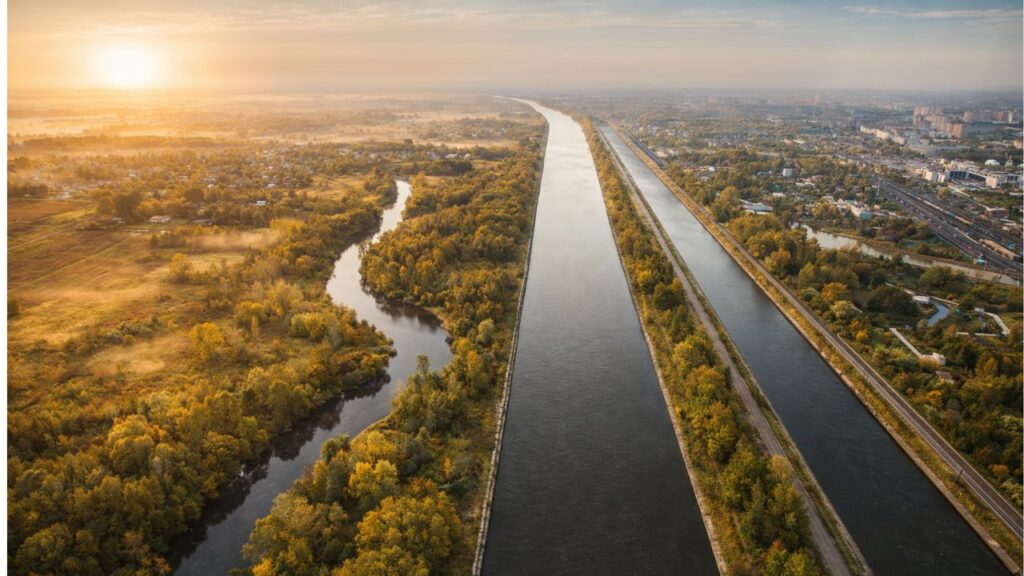
A barge glides past in silence, its wake brushing reeds planted by design, not chance. Beneath the calm surface lies the story of a nation that decided to reshape nature using pumps, concrete, and precise measurements.
For years, the Netherlands believed it had defeated the water.

Now, the cost of that victory is impossible to ignore.
 Goodbye to Old Licence Rules: Older Drivers Face New Renewal Requirements From February 2026
When Water Was Forced to Follow the Plan
The Dutch relationship with water starts with an unavoidable reality: nearly one-third of the country would naturally belong to the sea. For centuries, people built dikes, carved canals, and persuaded rivers to flow where towns and farmland demanded. Standing on a polder road today, the imbalance is tangible. The canal sits higher than the fields. The fields sit above the pumps. And without those pumps, the land would quickly return to water.
What looks tranquil on the surface is actually a constant, fragile negotiation.
Consider the Maas (Meuse) and the Waal, two major European rivers. Throughout the twentieth century, engineers straightened their winding paths, narrowed their channels, and locked them behind tall dikes. Floodplains became farmland. Villages grew. Roads crossed areas once claimed by seasonal floods. For decades, the strategy appeared successful. Disastrous floods faded into memory.
That confidence cracked during the winters of 1993 and 1995. Prolonged rainfall upstream sent massive volumes of water toward the Netherlands. The confined rivers behaved like water forced through a tight pipe. Levels rose too fast and too high. Two hundred fifty thousand people were evacuated. What once felt like control suddenly looked dangerously thin.
The original logic was straightforward: protect land by locking rivers between strong dikes. On paper, it made sense. But climate change quietly altered the equation. Warmer air holds more moisture. Rain patterns shift. Snowmelt upstream becomes unpredictable. Rivers that flooded once every decade now threaten overflow every few years. Straightened channels rush water toward the coast instead of letting it spread and slow naturally.
The more tightly rivers were controlled, the more dangerous they became.
Winning once meant committing to an endless effort just to avoid losing later.
The Unseen Costs of Reshaping Rivers
After the near-disasters of the 1990s, the Dutch response was both bold and restrained: give rivers space again. The national Room for the River program reversed centuries of thinking. Dikes were moved inland. Farmers received compensation to relocate. Side channels were carved to allow excess water to spread instead of slamming into cities. Near Nijmegen today, open water flows where homes once stood, and the Waal moves with less pressure.
This time, success required giving up land that had taken generations to reclaim.
For residents, the change was deeply personal. It meant leaving family farms rooted in history. It meant watching productive fields turn into seasonal flood zones. It meant trusting government promises of compensation and resettlement. Some accepted the transition. Others resisted fiercely. Many still look at the new waterways with a mix of pride and bitterness.
It’s the familiar realization that a clever solution created problems far larger than the original one.
Less visible, but equally damaging, was the loss of biodiversity that came before these reforms. Confined rivers and drained wetlands erased natural habitats. Floodplain forests disappeared. Fish spawning grounds vanished. Migratory birds lost critical resting areas. Straight channels sped sediments out to sea instead of nourishing ecosystems. Groundwater levels dropped. Peat soils dried, sank, and released stored carbon, pushing the land even lower below sea level.
Few people read engineering plans while wondering about dragonflies decades later. Yet that’s often where the true cost appears.
A Dutch water manager once summed it up simply: “Every meter taken from a river is a meter you must defend forever.”
- Economic cost: Maintaining dikes, pumps, sluices, and dredged channels requires billions of euros over time.
- Ecological cost: Lost wetlands and altered rivers reduce biodiversity, harm water quality, and increase carbon emissions.
- Social cost: Communities must relocate, adapt, or live with constant reliance on systems that cannot fail.
- Psychological cost: Ongoing anxiety, where heavy rain now triggers alerts and warnings.
- Political cost: Each new project sparks debate over land, funding, and whose safety comes first.
Why the Dutch Story Matters Everywhere
Seen closely, the Dutch experience becomes a preview of climate challenges worldwide. Many countries face the same temptation: straighten rivers, reclaim coastlines, build higher barriers, and trust technology to hold everything in place. The Netherlands shows how far that approach can go — and how quickly the costs accumulate.
Rising seas pressure coastal defenses. Heavier rainfall strains river systems. Each solution demands another upgrade, another investment. The land feels secure for now, but it depends entirely on pumps, power, and sustained political commitment.
The real question isn’t whether nature can be beaten once.

It’s how long society can afford to keep paying for that illusion.
Key Takeaways
- Long-term costs of control: Engineering victories over nature require permanent investment and bring lasting ecological damage.
- The Room for the River lesson: Reducing flood risk often means compromise and difficult personal choices, not just more concrete.
- Global relevance: The Dutch experience foreshadows challenges facing coastal and river regions worldwide as the climate changes.
