On a rainy Tuesday in Boston, inside a clinic that still carries the faint scent of disinfectant and coffee, a nurse gently removes a small white sensor from a patient’s arm. The woman sitting in the chair has lived with type 1 diabetes since she was eleven. She checks her phone, bracing herself for the usual red spikes. Instead, the graph shows a calm, steady line.
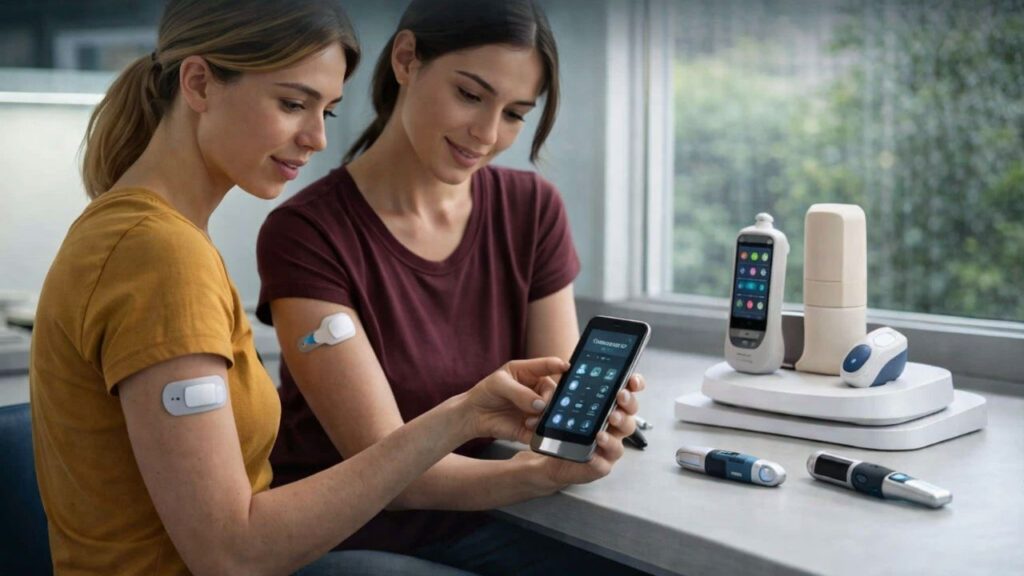
Her insulin pump and sensor have been communicating all night, smoothing out fluctuations while she slept. No alarms. No corrections. Just balance.
Outside, people hurry through puddles, unaware that inside this modest exam room, the daily rules of diabetes are quietly being rewritten. The nurse smiles and says, almost offhandedly, “This is only the start.”

The Silent Transformation Behind a Simple Glucose Line
If you haven’t kept up with diabetes care recently, you might still picture finger pricks, carb calculations, and the constant worry of nighttime highs. Those fundamentals remain, but the tools have evolved rapidly. In fact, some clinicians admit the pace of change has made parts of their training feel outdated.
 Goodbye to Old Licence Rules: Older Drivers Face New Renewal Requirements From February 2026
Step into a modern diabetes clinic today and you’ll see apps, sensors, and algorithm reports instead of handwritten logbooks. Pumps connect to phones, phones sync to the cloud, and the data comes back as personalized patterns showing how your body reacts to pizza dinners or stressful Mondays.
Behind those charts, a deeper change is underway. The relentless mental work of diabetes management is slowly being handed over to machines.
Not long ago, terms like “closed-loop systems” or “artificial pancreas” sounded futuristic. Today, they’re prescribed to teenagers who scroll through social media while their pumps adjust insulin doses every few minutes without intervention.
One 17-year-old described waking up without a headache for the first time in years. His overnight glucose stayed in range. He hadn’t done anything special. He simply slept.
Recent clinical trials echo these stories. People using hybrid closed-loop systems spend significantly more time in healthy glucose ranges. Severe lows decrease. Dangerous highs flatten. Parents of children with type 1 diabetes often say the biggest change isn’t in the data. It’s in their sleep.
Why This Shift Feels Different From Past Tech Upgrades
What made this possible is a quiet combination of more accurate sensors, smarter algorithms, and gentler hardware. Continuous glucose monitors now check sugar levels every few minutes through the skin, replacing the need for constant finger pricks. Pumps deliver tiny, precise doses based on prediction, not just reaction.
More than new gadgets, this change is about returning mental space to the person living with diabetes. When machines handle the minute-by-minute calculations, your brain no longer has to act as a full-time pancreas. It can simply be a brain again.
This isn’t magic. Not yet. But compared to the era of syringes and guesswork, today’s systems already feel like they belong to a different century.
Beyond Management: The Push Toward Fewer Treatments
Here’s where the story truly shifts. For decades, diabetes care focused on living better with a lifelong condition. Now, researchers are openly exploring something more radical: reducing or eliminating daily treatment altogether.
Across labs in Cambridge, California, and beyond, scientists are developing beta cell replacement therapies. The goal is to provide new insulin-producing cells that can survive safely inside the body. Some are created from stem cells and trained to behave like natural pancreatic cells. Others are protected inside tiny capsules that shield them from immune attacks.
Early results have already made headlines. In one trial linked to Vertex Pharmaceuticals, a man with long-standing type 1 diabetes reduced his insulin use by over 90% after receiving stem-cell–derived islet cells. His pancreas function, measured by C-peptide levels, began to resemble that of someone without diabetes.
Another approach uses an implantable pouch filled with insulin-producing cells, designed to act like a mini pancreas under the skin. Roughly the size of a credit card, it quietly performs the job the pancreas once handled.
These trials remain early, with careful language about partial remission and unknown durability. Still, for people who have counted carbs since childhood, a 90% reduction in insulin is less a statistic and more a glimpse of a different life.
What makes these therapies so disruptive is their logic. Instead of constantly correcting blood sugar from the outside, they aim to restore the body’s internal system. That represents a fundamental shift away from endless management.

Rewriting the Biology, Not Just Replacing Cells
At the same time, gene-editing tools like CRISPR are being explored in conditions tied to immune and metabolic dysfunction. The long-term hope is not only to replace damaged cells, but to retrain the immune system that destroys them.
Other research teams are testing vaccines designed to delay or even prevent type 1 diabetes in high-risk children by calming immune responses before the pancreas is attacked.
If even some of these efforts succeed, the insulin pens, pumps, and supplies that define diabetes today could eventually feel outdated, much like dial-up internet in an age of fiber connections.
Living in the Transition Without Burning Out
So what does this mean for someone managing diabetes right now, caught between finger pricks and future cures? Many specialists suggest treating current technology as supportive teammates, not strict taskmasters.
If you use continuous glucose monitoring or smart insulin tools, focus on patterns rather than perfection. A midweek spike might reflect commute stress, not personal failure. Make one small adjustment, watch for a few days, and adjust again.
Think of today’s tools as training wheels. The better you understand your body now, the more prepared you’ll be when more advanced options arrive.
Breakthrough headlines can also stir complicated emotions. Some people feel pressure to use every feature flawlessly. Sensors fall off. Pumps alarm at inconvenient times. Sometimes, you just eat the cake.
The mistake is believing imperfect use equals failure. Progress in diabetes care is meant to serve people, not judge them. Simplifying settings or taking mental breaks isn’t regression. It’s human.
As one endocrinologist put it, today’s newly diagnosed patients may not need the same treatments ten years from now. The conversation is shifting from tighter control to the real possibility of less treatment altogether.
Practical Ways to Stay Grounded While Things Change
- Stay informed without overload: Check trusted updates monthly instead of chasing every headline.
- Ask one focused question at appointments: “If I were your family, what option would you want me to know about?”
- Think in time horizons: What helps now, in a few years, and over the next decade?
- Protect emotional energy: Step back if news creates frustration instead of hope.
- Share responsibility: Make sure at least one other person understands your setup and emergency plan.
A Moment That Redefines What “Chronic” Means
Health headlines often promise revolutions and deliver incremental change. Diabetes has seen plenty of those disappointments. This moment feels different.
Daily care is steadily becoming automated, easing the constant interruptions and sleepless nights. At the same time, entirely new strategies — from stem-cell implants to immune-targeted therapies — are pushing toward a future where lifelong treatment may no longer be the default.
That future still faces real barriers: cost, access, and inequality across regions. Breakthroughs only matter if they become widely available, not exclusive luxuries.
Even so, the ground is shifting. Children diagnosed today may one day tell their families about a time when devices were worn constantly, much like earlier generations spoke of glass syringes and boiling needles.
For decades, diabetes has been defined by constant adjustment. Now, the question is slowly changing from “How can I manage this better?” to “How long will I need to manage this at all?”
No one can promise timelines. Science rarely moves on demand. But for the first time, the idea that today’s standard treatments could become obsolete feels less like fantasy and more like an ongoing project.

Perhaps the real shift is this: people with diabetes are beginning to imagine a future where the condition no longer dominates every thought. What they do with that reclaimed time and energy may be the most meaningful outcome of all.
Key Takeaways
- Automation of daily care: Closed-loop systems reduce constant decisions, leading to better sleep and steadier days.
- Cell-based therapies emerging: Early trials suggest insulin dependence could drop dramatically for some.
- Preparing for change: Using current tools wisely builds confidence and direction instead of passive waiting.