
Debates over vaccines have grown louder in recent years, especially in the United States, where public health and personal choice often collide. Critics argue that refusing vaccines doesn’t just affect the individual but can expose entire communities to preventable risks. Supporters of mandates say immunization protects vulnerable people, while opponents frame refusal as a matter of freedom. As outbreaks reappear and trust in institutions wavers, the conversation has shifted from personal health decisions to broader questions about responsibility, safety, and what freedom truly means in a shared society.
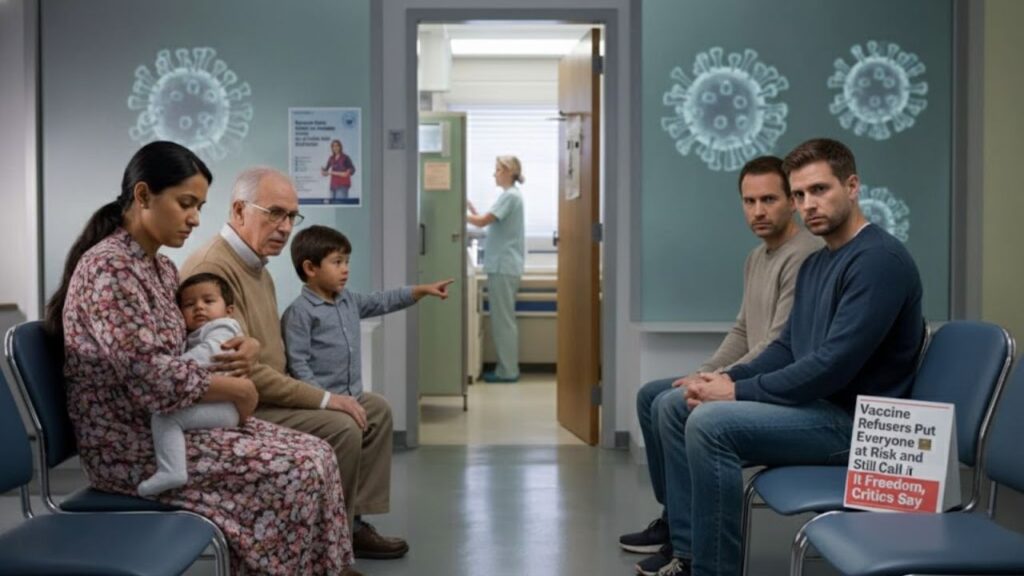
Vaccine refusal and public safety concerns
Public health experts warn that vaccine refusal can weaken community protection, making outbreaks more likely even among vaccinated people. Diseases once considered rare can return when coverage drops, placing infants, seniors, and immunocompromised individuals at risk. Critics point to community health impact, preventable disease spread, and shared social responsibility as reasons vaccination matters beyond personal choice. They argue that freedom in a society comes with limits when individual actions can harm others. In crowded schools, workplaces, and public transport, one person’s decision may ripple outward, challenging the idea that vaccine refusal is a purely private matter.
Freedom debate around vaccine refusal
Those opposing vaccination mandates often frame their stance around liberty and bodily autonomy. However, critics counter that true freedom depends on collective risk reduction, public trust erosion, and evidence-based decisions. They note that laws already restrict behavior that endangers others, from traffic rules to smoking bans. In this view, vaccines are similar: a small personal step that supports the wider good. The debate becomes less about coercion and more about balancing rights with responsibilities in a society where health threats do not respect individual boundaries.
 After 131 Cats Were Removed, This Island Ecosystem Changed in Ways Scientists Didn’t Expect
Why critics say vaccine refusal endangers others
Health advocates argue that vaccines are a cornerstone of modern medicine, drastically reducing deaths and hospitalizations. When refusal rates rise, herd immunity breakdown, healthcare system strain, and avoidable outbreaks can follow. Hospitals may face surges that delay care for non-related conditions, affecting everyone. Critics emphasize that vaccination is not about perfection but about lowering overall risk. They see refusal as undermining decades of progress and putting frontline workers and high-risk populations in jeopardy, even when those groups follow medical advice.
 Goodbye to Low Pension Payments: Higher Retirement Support Rates Start Early February 2026
Summary and broader implications
The vaccine debate reflects deeper tensions about trust, authority, and social duty. While personal choice matters, critics stress mutual community protection, long-term public safety, and ethical civic balance as essential principles. In interconnected societies, health decisions rarely stay isolated. The challenge lies in fostering dialogue that respects concerns without ignoring scientific evidence. Ultimately, the question is not just about freedom, but about how communities choose to protect one another when faced with shared risks.
| Factor | High Vaccination Areas | Low Vaccination Areas |
|---|---|---|
| Outbreak Frequency | Rare and contained | More frequent |
| Hospital Burden | Generally manageable | Often strained |
| Risk to Vulnerable | Lower overall risk | Higher exposure |
| Public Health Costs | Lower long-term costs | Higher emergency costs |
Frequently Asked Questions (FAQs)
1. Why do critics oppose vaccine refusal?
They believe refusal increases health risks for the wider community, not just individuals.
2. Is vaccine refusal legal in the United States?
Laws vary by state, with some allowing exemptions and others enforcing stricter rules.
3. How does vaccine refusal affect herd immunity?
Lower vaccination rates can weaken herd immunity and allow diseases to spread.

4. Can vaccinated people still be affected by outbreaks?
Yes, especially those with weaker immune responses or underlying conditions.
