
Greenland’s climate is often imagined as endlessly frozen, lifeless, and unchanging, but that picture is deeply misleading. In reality, Greenland experiences complex seasonal shifts, regional contrasts, and surprising weather patterns that challenge common assumptions. Closely connected to Denmark through governance and research, Greenland plays a critical role in how scientists understand climate systems across the North Atlantic. From mild coastal summers to dynamic ice behavior, the island’s climate is far more nuanced than popular myths suggest, and understanding it matters for global climate awareness.
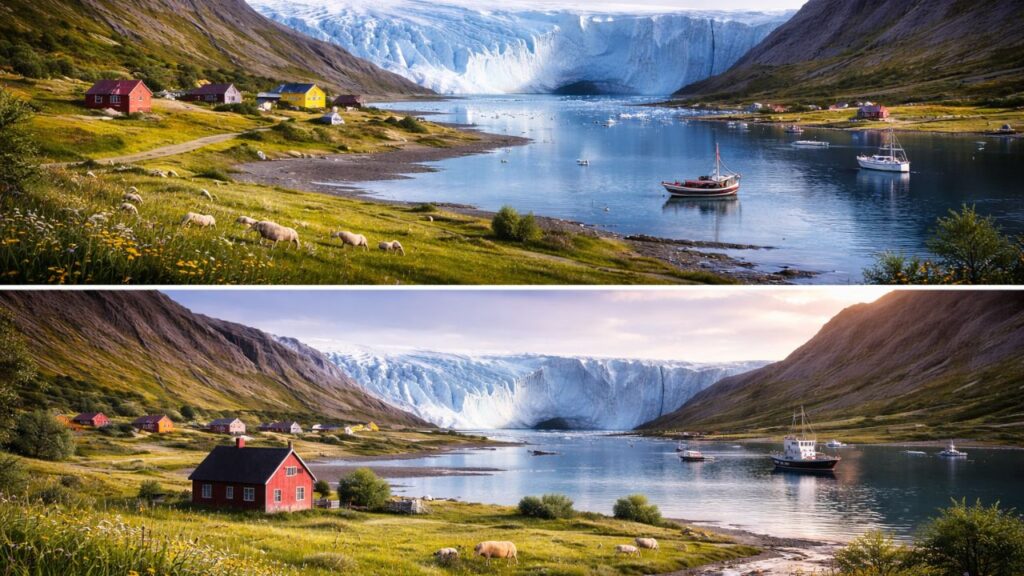
Greenland climate myths vs reality
One of the biggest misconceptions is that Greenland is frozen solid year-round. In truth, coastal regions experience seasonal temperature swings that allow vegetation, wildlife, and even agriculture to exist in limited forms. Summer temperatures can rise above freezing, leading to surface ice melt that feeds rivers and fjords. Another myth assumes uniform cold, yet Greenland’s vast size creates regional climate differences between the icy interior and milder coastlines. These variations shape daily life for residents and influence how scientists track climate patterns across the Arctic and North Atlantic regions.
How Greenland’s weather actually behaves
Greenland’s weather is not static; it is shaped by ocean currents, wind systems, and shifting atmospheric pressure. The surrounding seas moderate temperatures, creating unexpected coastal warmth compared to inland ice sheets. Storm systems moving from the Atlantic can bring snow, rain, or sudden thaws, resulting in rapid weather changes within short periods. Scientists also observe strong katabatic winds flowing from the ice sheet toward the coast, influencing local climates. These forces combine to make Greenland’s weather dynamic, unpredictable, and far more complex than the stereotype of endless ice.

Why Greenland’s climate myths matter
Misunderstanding Greenland’s climate can distort how people view global warming and Arctic change. Assuming the island is always frozen hides the reality of accelerating ice loss during warmer months. These changes contribute to global sea rise and affect ocean circulation patterns far beyond the Arctic. For Greenlandic communities, shifting conditions impact hunting, travel, and infrastructure stability. From a scientific perspective, ignoring nuance leads to oversimplified climate narratives that fail to capture how sensitive polar regions truly are in a warming world.
 Goodbye to Old Licence Rules: Older Drivers Face New Renewal Requirements From February 2026
Looking beyond the stereotypes
Greenland’s climate story is not about extremes alone, but about balance, variability, and rapid change. Recognizing its complexity helps scientists refine models and helps the public better grasp Arctic realities. The island serves as a living laboratory where climate feedback signals appear earlier than elsewhere. By moving past outdated myths, policymakers and citizens alike can better understand why Greenland matters to the entire planet. Ultimately, clearer awareness supports smarter decisions and highlights the urgency of addressing long-term climate risks before changes become irreversible.
| Climate Aspect | Common Myth | Actual Condition |
|---|---|---|
| Temperature | Always below freezing | Seasonally variable |
| Ice coverage | Completely permanent | Seasonal surface melt |
| Weather patterns | Stable and calm | Highly dynamic |
| Coastal climate | Same as interior | Ocean-influenced |
| Climate impact | Local only | Globally connected |
Frequently Asked Questions (FAQs)
1. Is Greenland always covered in ice?
No, while much of it is icy, coastal areas experience seasonal thawing.

2. Does Greenland have summer weather?
Yes, summers can bring above-freezing temperatures in many regions.
3. Why is Greenland important for climate science?
Its ice and weather patterns provide early signals of global climate change.

4. Are climate myths about Greenland harmful?
Yes, they oversimplify reality and reduce understanding of climate risks.
