
On a sleepy Sunday morning at the drugstore, beneath slightly buzzing neon lights, a woman in a black blazer stands motionless in the skincare aisle. To her left sit the glossy jars: frosted glass, gold-toned lids, names that sound like luxury perfumes. To her right, a plain white tub with a blue lid. Its price? Less than what you’d spend on a couple of coffees.
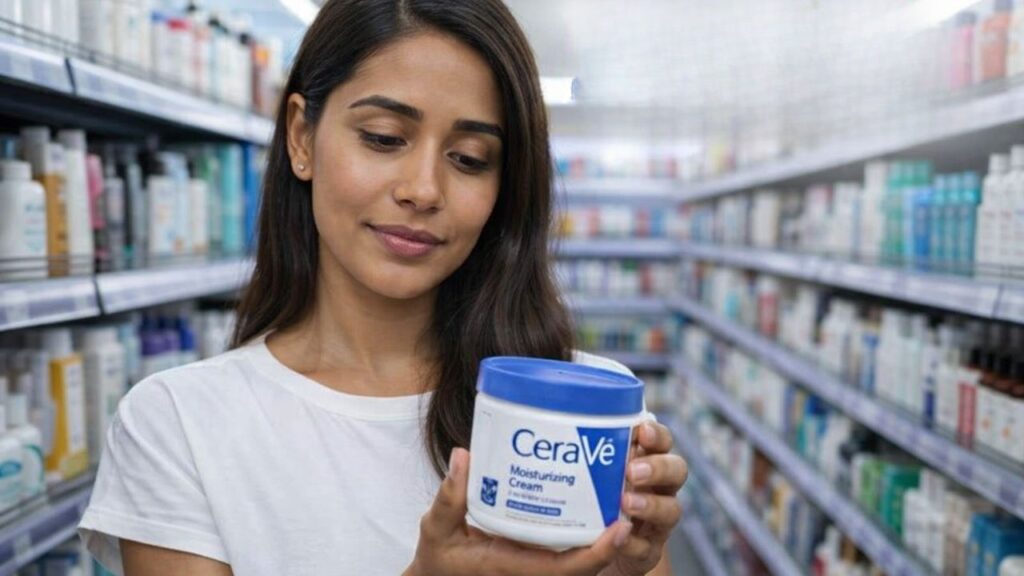
She lifts the expensive cream, skims the promises, arches an eyebrow. Then she picks up the simple tub, flips it over, and smiles. “My dermatologist swears by this,” she tells the cashier, almost apologetically, as if choosing the plain option needs an excuse.
And it has very little to do with marble bathrooms or rose-gold tools.
 Neither boiled nor raw : the best way to cook broccoli to preserve maximum antioxidant vitamins
The Modest Moisturizer Dermatologists Truly Trust
Ask dermatologists what they personally use at home, and a pattern quickly emerges. Their answers usually point to the same type of product: a low-cost, fragrance-free, no-frills moisturizer packaged in a tube or tub.

No shimmering peptides. No diamond dust. Just a thick, almost old-fashioned cream that wouldn’t look out of place in a grandmother’s bathroom.
That’s the product quietly earning the top spot in clinics worldwide.
A New York dermatologist once explained that when patients ask for “the best cream, like celebrities use,” she simply smiles and reaches for the same sample every time: a basic pharmacy-brand moisturizer. No influencer campaign. No luxury counter. Just a straightforward label and a formula rich in ceramides and glycerin.
She remembers a patient with severely dry, irritated skin who had cycled through three premium “cloud creams,” each pricier than the last. None helped. After one month with the basic cream, her skin barrier settled, redness eased, and she stopped relying on heavy makeup to hide irritation.
The patient’s stunned response? “You mean this was all I needed?”
From a dermatological perspective, the reasoning is blunt and simple. Skin ignores marketing and responds to ingredients. Experts favor short, functional formulas: humectants like glycerin and hyaluronic acid, occlusives such as petrolatum, and barrier-repairing ingredients like ceramides or niacinamide.
Fragrance and essential oils are often skipped, not because they’re inherently bad, but because they’re among the most common triggers for irritation and allergies. That’s why the “number one” cream is usually the one that hydrates quietly, protects the barrier, and avoids drama.
Unexciting in the jar. Transformative on stressed skin.
Using a Basic Cream the Right Way
How you apply a simple moisturizer can make a surprising difference. Dermatologists tend to recommend the same uncomplicated routine: cleanse gently, leave the skin slightly damp, then apply a generous layer of cream. Not five steps — just one, done properly.
Many suggest warming the product between your fingers first, then pressing it into the cheeks, forehead, and chin instead of rubbing aggressively. The idea is to coat the skin evenly, like putting on a soft cotton T-shirt rather than squeezing into something restrictive.
On especially dry days, a thin second layer can help on areas like the cheeks or around the nose.
 Goodbye to Old Licence Rules: Older Drivers Face New Renewal Requirements From February 2026
Plenty of people unknowingly undermine good moisturizers. They over-cleanse with harsh foaming washes, layer multiple active serums, and then blame the cream when their skin stings. Often, the issue isn’t the product — it’s the routine around it.
Dermatologists almost sound relieved when someone agrees to simplify: a mild cleanser, one dependable moisturizer, sunscreen in the morning. Stick with it for four weeks, and skin often responds with calm, steady improvement.
This doesn’t mean giving up enjoyable skincare entirely. It means building on a solid base first. As one French dermatologist put it:
“Trendy actives are like high heels — great occasionally, but you don’t live your life in them. Everyday skin health relies on a sturdy pair of sneakers: a basic moisturizer.”
What Experts Look For in “Old-School” Creams
- Short, easy-to-read ingredient lists
- No fragrance or very minimal fragrance
- Ceramides, glycerin, and/or petrolatum
- Tested on sensitive skin, not only “normal” skin
- Affordable enough for generous, twice-daily use
The last point matters more than most people admit. When a cream is expensive, users tend to apply too little — and then conclude it doesn’t work.
What This Shift Reveals About Beauty Today
When dermatologists consistently recommend modest products, it raises an uncomfortable question: what are we really paying for with a $120 jar of cream — the formula, or the fantasy around it?
Many of us know that feeling: opening a luxurious jar and hoping it will finally change how our skin looks, how we feel, how we see ourselves. The basic moisturizer offers no such promises. It simply says, “I’ll help your skin function better.”
That may be why experts defend it so strongly.
There’s something grounding about choosing the plain tub at night after a day of scrolling past flawless faces online. It’s a decision rooted in function, not fantasy. Supporting the skin you have, rather than chasing the one you wish you woke up with.
In a quiet way, that choice feels rebellious. You start to notice that glow comes less from gold packaging and more from skin that isn’t constantly battling dryness and inflammation.
This mindset doesn’t banish pretty jars forever. It simply reshuffles priorities. First, a dependable moisturizer that respects your skin barrier and your budget. Then, if you want, the extras — a serum here, a mask there.
The dermatologist-approved “number one” isn’t a single brand or secret formula. It’s a category: simple, barrier-supporting moisturizers that work across ages, skin types, and trends.

The next time you’re standing under fluorescent lights in that aisle, the real question might not be “Which cream looks the most luxurious?” but “Which one will my skin quietly thank me for in three months?”
Key Takeaways
- Simple formulas win: Fragrance-free creams with humectants and barrier-repairing ingredients focus on function over hype.
- Application matters: Gentle cleansing, damp skin, and consistent use maximize results.
- Higher price doesn’t mean better results: Affordable pharmacy moisturizers often outperform luxury products for sensitive or dry skin.
